

Third-gender Artist Model
22 years experience as a life drawing artist's model
50 years as a submissive sissy femboy
I identify as a:
Pre-Op homosexual transsexual
berdache/third-gender type
100% female-roled receptive male
Preferential "Class VIII" submissive 100% female-roled receptive zoosexual from 1970-2000
(I became celibate as a zoosexual in 2000)


From 1970 to 2000, I consider my core identity to be a submissive Preferential female-roled receptive zoosexual for large intact male dogs and intact male equines.
Psychologically I have a "Pre-Op" Male to Female Homosexual Transexual Identity
The reason I refer to myself as "third-gender" is because I am physically a male, yet psychologically I feel like a female.
I've been a owned-collared "free Use" submissive, 100% female-roled femboy
since 1975
I got caged in 1999, I am 100% psychologically feminized/emasculated
"In 2000 I started serving only human males sexual"

("I only model wearing a cage")
It is intented to figure my own self out better, why I am who I am
though this is the exhibitionistic
element for me
because I am a
"exhibitionist"
I truly love modeling and modeling for artist has no erotic element for me.
My questions I've struggled with all my life,
why do I need treated sexually like a female.
"And wish to be Female"
Many questions
The content is intended for educational, research and journaling purposes Much of the content is in Scenario Form
thus whether fact or fiction, is by interpretation.
If only;
"How things could of turned out dilemma"
"Like a thought experiment of sorts"
or
" Some aspects based on fact "
" A hodgepodge script "
"Thought experiment"
My Web Journal
"Like an Actor preparing for a script in order to be convincing"
"A Study and Outline for my Novels;
fiction novel: "The Jensen Group"
and
"No One needs to be an another more then the Transsexual, No One needs another more then the Exhibitionist"
(a life as a submissive female-roled receptive zoosexual)


Former Preferential
female-roled
receptive zoosexual
1970 to 2000
" As much as Life Drawing can express Reality, it can express Fantasy "
NSFW
contains nudity and sexual content
A journey of "Living vicariously in a imagined scenario"
All videos, photos, gifs
are for illustrative purposes
note: most of the imagery on my site is for illustrative purposes to illustrate how I became completely psychologically feminized/emasculated and how my identity revolves around the need to be female-roled both sexually and non-sexually.
Forever editing the site
established
FEBRUARY 19th, 2020


Contact at;


Gender dysphoria
What is gender dysphoria?
For some transgender people, the difference between the gender they are thought to be at birth and the gender they know themselves to be can lead to serious emotional distress that affects their health and everyday lives if not addressed. Gender dysphoria is the medical diagnosis for someone who experiences this distress.
Not all transgender people have gender dysphoria. On its own, being transgender is not considered a medical condition. Many transgender people do not experience serious anxiety or stress associated with the difference between their gender identity and their gender of birth, and so may not have gender dysphoria.
Gender dysphoria can often be relieved by expressing one’s gender in a way that the person is comfortable with. That can include dressing and grooming in a way that reflects who one knows they are, using a different name or pronoun, and, for some, taking medical steps to physically change their body. All major medical organizations in the United States recognize that living according to one’s gender identity is an effective, safe and medically necessary treatment for many people who have gender dysphoria.
It's important to remember that while being transgender is not in itself an illness, many transgender people need to deal with physical and mental health problems because of widespread discrimination and stigma. Many transgender people live in a society that tells them that their deeply held identity is wrong or deviant. Some transgender people have lost their families, their jobs, their homes, and their support, and some experience harassment and even violence. Transgender children may experience rejection or even emotional or physical abuse at home, at school, or in their communities. These kinds of experiences can be challenging for anyone, and for some people, it can lead to anxiety disorders, depression, and other mental health conditions. But these conditions are not caused by having a transgender identity: they're a result of the intolerance many transgender people have to deal with. Many transgender people – especially transgender people who are accepted and valued in their communities – are able to live healthy and fulfilling lives. - transequality.org
What does "gender transition" mean?
Transitioning is the time period during which a person begins to live according to their gender identity, rather than the gender they were thought to be at birth. While not all transgender people transition, a great many do at some point in their lives. Gender transition looks different for every person. Possible steps in a gender transition may or may not include changing your clothing, appearance, name, or the pronoun people use to refer to you (like “she,” “he,” or “they”). Some people are able to change their identification documents, like their driver’s license or passport, to reflect their gender. And some people undergo hormone therapy or other medical procedures to change their physical characteristics and make their body better reflect the gender they know themselves to be.
Transitioning can help many transgender people lead healthy, fulfilling lives. No specific set of steps is necessary to “complete” a transition—it’s a matter of what is right for each person. All transgender people are entitled to the same dignity and respect, regardless of which legal or medical steps they have taken. - transequality.org
Opinions on transitioning
Opinion on transitioning-1
I feel like this is genuinely a very toxic issue in the trans community. Trans healthcare should be available for everyone (which it 100% isn't unfortunately), however a trans person should not feel compelled to transition either socially or medically, and in not doing so this does not mean they are any less trans.
As mentioned there a million reasons for not transitioning. Some of these are social, some are financial, and some are quite frankly medical. I know that for me, I am currently suffering with health problems and the thought of medically transitioning on top of that is too much and I have genuine concern than transitioning would worsen my current medical conditions.
Like any community that is marginalized, there is unfortunately an insane amount of in fighting about what qualifies yourself as a trans person. I know when I first realized my gender dysphoria I searched a lot of online forums, and the fact that I hadn't and still haven't transitioned socially or medically makes me feel very ostracized. Like I am not one of the 'cool kids'.
The fact of the matter is, it is incredibly likely that the majority of trans people do not socially or medically transition owing to all the social pressures, financial costs and medical aspects. Hopefully in the future this will change as I expect that a very considerable number of these individuals do want to socially and medically transition, and I am sure there are also some who do not even if they were offered the opportunity.
Trans existence as it currently is, is still incredibly binary and is definitely viewed through a cisgendered heteronormative patriarchal lens. Medical gatekeeping and discrimination makes it almost impossible for true trans liberation. Currently I would say most people view their trans journey as inclusion rather than liberation, at no fault of their own, there isn't much alternative in this current climate.
Opinion on transitioning-2
Absolutely. Not all trans people choose to medically transition or even have access to medical transition. For most of human history there wasn't even an option to take hormones or get surgeries. Though there were some methods, such a chewing on licorice root, that could mimic some of the effects of hrt.
Transness does not have to be medicalized. Anyone who is not their assigned birth gender, who claims the trans identity, is trans in my book :)
My Opinion is, I wish it would of be at least possible to get a zero depth-vaginoplasty so I could remove the maleness of a penis from myself.
Zero-Depth Vaginoplasty (Vulvoplasty) Overview
Zero-depth vaginoplasty, also called vulvoplasty or shallow-depth vaginoplasty, is a gender-affirming surgical procedure that reconstructs the external female genitalia (vulva and clitoris) without creating a vaginal canal Gender Confirmation+1.
What It Involves
-
Tissue sources: The penis and scrotum are used to create the clitoris, labia majora, labia minora, and a clitoral hood Gender Confirmation+1.
-
Urethral repositioning: The urethra is shortened and moved to allow normal urination Gender Confirmation.
-
No vaginal canal: Instead of a vaginal opening, a small dimple or pocket is created at the site where the canal would be Stiller Aesthetics.
-
Functionality: The clitoris retains full erogenous sensation and the potential for orgasm; urination is normal Gender Confirmation.

When I hear K. D. Lang sing this song, I think about wanting to be a girl


For myself, having the breasts of a female would have been wonderful, yet the risks were not worth that.
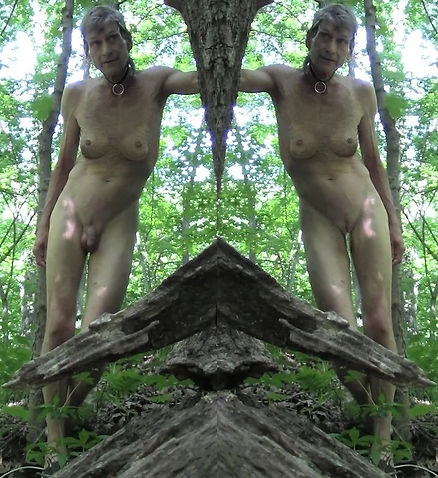

My only great desire was to have a female like vagina

Being a; Class VIII ZOOSEXUAL (100% female-roled receptive)
I learned at a very early age that I could easily find straight human males who would use me as their "catamite" (female-roled receptive sissy) and objectify me sexually.
However I learned early on I could never find a straight human male who would be committed
completely to me as a partner.
Where I could have male stud dogs, jack donkeys and stallion ponies that were committed to me as I was them sexually.
(they took me as their female sex partner and only "bred" me and I only would be bred by them)
Class VIII zoosexuals: regular zoosexuals
The so-called “classic” zoophiles. They do not enjoy sexual intercourse with humans and prefer animals for intercourse. They can however have sex with both humans and animals. In this sense they differ from class X zoophiles, who can have sex only with animals. These are the people, who love animals at an emotional level, and express their love through sexual intercourse and total commitment to their animal partners.
They have sex with animals, as one would normally have with human partners. These people tend to love animals, and by and large do not hurt or harm animals.
From 1982 to 2000 I was nearly a Class X zoosexual
By 1982 I very much only wanted to be totally committed to my male stud dogs, jack donkeys and stallion ponies as their female-roled sex partner and care taker.


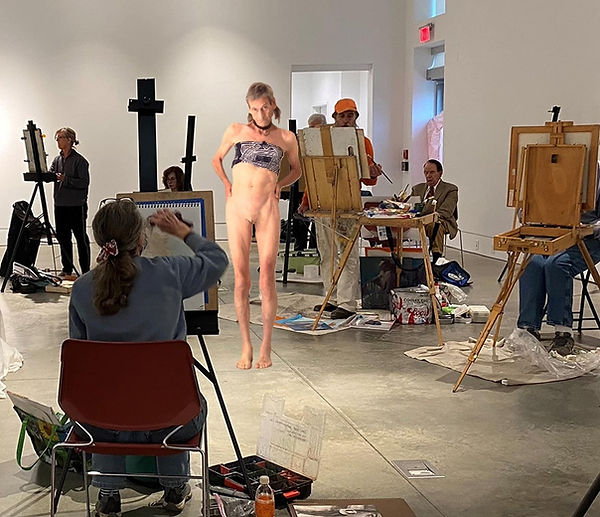
The greatest thing in the world would have been modeling for classes after getting a zero depth-vaginoplasty




Symptoms/manifestations caused by Gender dysphoria /gender identity disorder
1. Extremely sexually attracted to "Males" and only desire to be in passive receptive role
2. Extreme desire to be impregnated with Male's living sperm
3. Extreme desire to be pregnant and breast feed
4. Extreme desire to perform fellatio on Males and be penetrated anally
5. Extreme desire to have a penis up inside my bottom ejaculating into me
6. Extreme desire to be feminine, sexy, submissive for my Male lovers
7. Extreme desire to ingest my male lover's semen/sperm
8. Very extreme desire to have a female looking vagina/pussy.
9. Desire only straight human males if having sex with humans, I prefer to be gang-banged, objectified sexually by Dominate Str8 human males.
10. Primarily/extremely attracted to large intact Male dogs, small jack donkeys, stallion ponies and I crave performing fellatio on all large stallions to ingest semen
I consider my core identity to be a "female-roled receptive sex surrogate", my life
has always revolved around being "bred by" or "performing fellatio" on by my Male canine and equine lovers, caring for them.
11. I am a free-use sexually submissive
I can't be a man, I only want to be like Her!
For me,
I'd say it's like being in a constant state
of
from constantly wishing I was female


My Gender Affirmation/Sexual identity Affirmation have come mainly by performing sexually for males in a strictly female receptive role for them as a submissive free-use female roled sex surrogate.
I was Born a Man, but can't be a Man

Psychoanalytical theories-the male child's separation from his mother psychologically
These are based on the assumption that male gender identity requires the male child's separation from his mother psychologically so that he does not identify with her as a member of the same sex, the way a girl does. It is thought that exhibitionists regard their mothers as rejecting them on the basis of their different genitals.
Therefore, they grow up with the desire to force women to accept them by making women look at their genitals.
In my case, because I never separated from my mother psychologically, thus I identify as a female and thus I'm a Pre-Op male to female transsexual type.


I've watched most of Robert Sapolsky's lecture series over the years and think his opinion is worth listening to concerning the transgender issue.
